

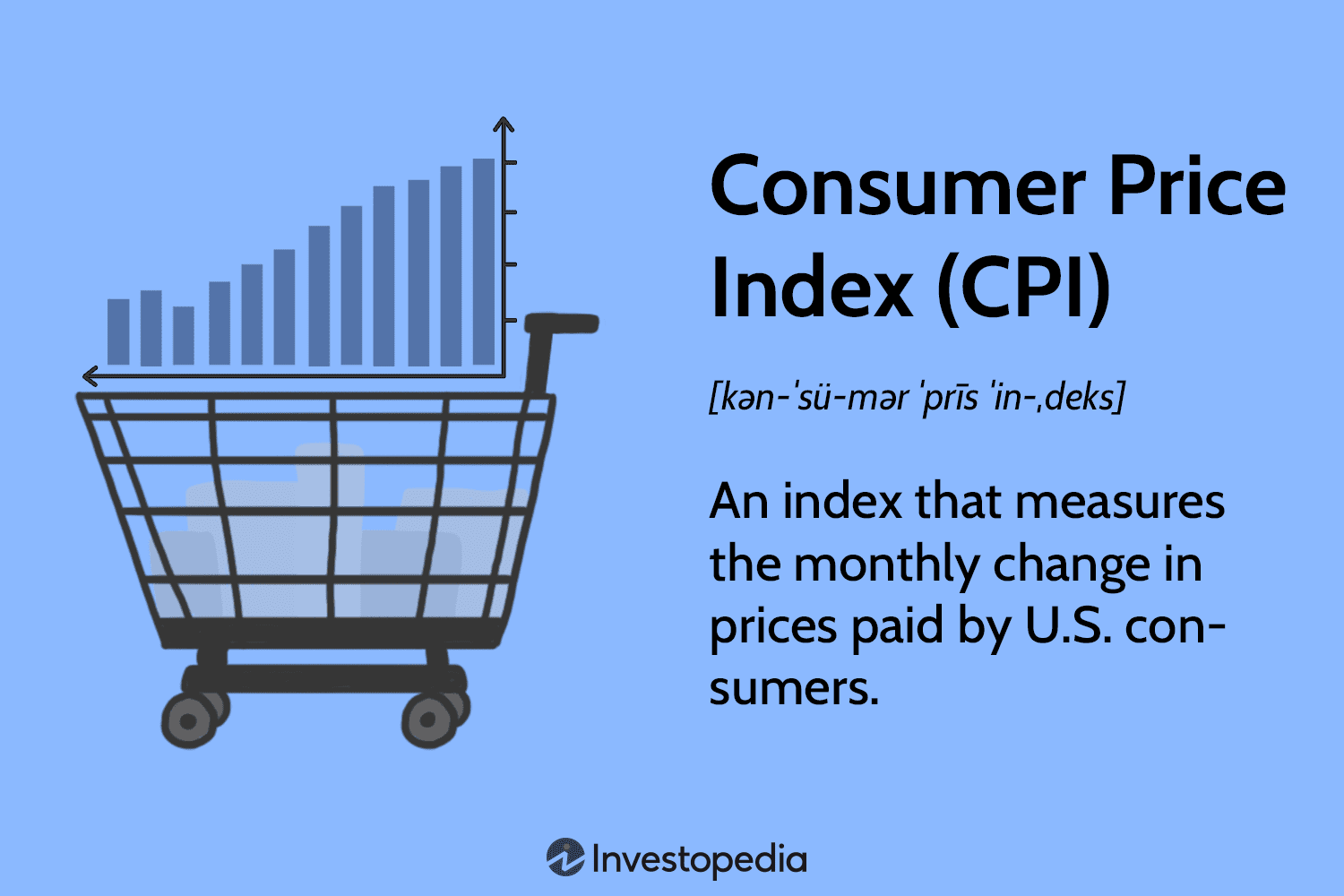
Inflation is the silent tax on your portfolio. While most investors obsess over earnings reports and Fed rate decisions, the monthly Consumer Price Index (CPI) release quietly reshapes the real value of every dollar you own — and every asset you hold. In 2022, when CPI surged to a 40-year high of 9.1%, investors who understood the relationship between inflation and asset classes were far better positioned to protect their wealth than those who were caught off guard. Understanding how inflation works, how it’s measured, and how it ripples through stocks, bonds, real estate, and cash isn’t just academic — it’s one of the most practical skills a retail investor can develop. Whether you’re building a retirement nest egg or actively trading the market, inflation is always in the room.
What Is Inflation and How Is CPI Measured?
Inflation refers to the general rise in prices across an economy over time. When inflation is running hot, each dollar you hold buys less than it did before. When it’s low and stable — the Federal Reserve targets 2% annually — it’s considered a healthy sign of a growing economy.

The Consumer Price Index (CPI) is the most widely followed measure of inflation in the United States. Published monthly by the Bureau of Labor Statistics (BLS), CPI tracks the average change in prices paid by urban consumers for a basket of goods and services. That basket includes:
- Housing (shelter costs, rent, owner’s equivalent rent) — roughly 33% of the index
- Food — groceries and dining out, about 14%
- Energy — gasoline, electricity, natural gas
- Medical care — health insurance, prescription drugs, hospital services
- Transportation — new and used vehicles, airfare
- Apparel, education, and recreation
You’ll often hear two versions of CPI discussed in financial media: headline CPI and core CPI. Headline CPI includes everything in the basket. Core CPI strips out food and energy prices, which tend to be volatile month to month. The Fed pays close attention to core CPI because it gives a cleaner signal about underlying inflation trends.
Another inflation gauge worth knowing is the Personal Consumption Expenditures (PCE) price index, which is actually the Fed’s preferred inflation measure. PCE adjusts more dynamically to changes in consumer behavior than CPI does, and it typically runs slightly lower. When Fed officials talk about their 2% inflation target, they’re referring to PCE — but CPI moves markets more dramatically because it’s released earlier and watched more closely by traders.
How Inflation Affects Bonds and Fixed Income
Bonds are the asset class most directly and immediately damaged by rising inflation — and understanding why is crucial for any investor with fixed income in their portfolio.
When you buy a bond, you’re locking in a fixed stream of future payments. If inflation rises, those future payments are worth less in real (inflation-adjusted) terms. As a result, existing bond prices fall when inflation expectations rise, because investors demand higher yields to compensate for the erosion of purchasing power.
This inverse relationship between bond prices and yields is one of the most fundamental concepts in investing. In 2022, the Bloomberg U.S. Aggregate Bond Index — the benchmark for the broad bond market — fell roughly 13%, its worst year in modern history, as the Fed aggressively hiked rates to combat inflation.
Not all bonds are equally vulnerable, however:
- Short-duration bonds are less sensitive to rate changes than long-duration bonds. A 2-year Treasury will lose far less value in a rate-hike cycle than a 30-year Treasury.
- Treasury Inflation-Protected Securities (TIPS) are specifically designed to protect against inflation. Their principal value adjusts with CPI, making them a direct hedge against rising prices.
- I Bonds, issued directly by the U.S. Treasury, offer a composite interest rate tied to CPI. They became enormously popular in 2021-2022 when their rates briefly exceeded 9%.
- High-yield (junk) bonds can sometimes hold up better in moderate inflation environments because their higher yields provide more cushion — but they carry credit risk.
The key takeaway: in a rising inflation environment, shortening bond duration and considering TIPS or I Bonds can meaningfully reduce the damage to your fixed income allocation.
How Inflation Affects Stocks
The relationship between inflation and equities is more nuanced than it is with bonds. Moderate inflation — say, 2% to 3% — is generally considered healthy for stocks because it reflects a growing economy where companies have pricing power. The trouble starts when inflation runs significantly above that range.
Why high inflation hurts stocks:
- Higher discount rates: Stock valuations rely on discounting future cash flows back to present value. When inflation rises, interest rates follow, which raises the discount rate and mechanically reduces the present value of future earnings. Growth stocks — whose value is heavily weighted toward distant future profits — are hit hardest.
- Margin compression: When input costs (raw materials, labor, energy) rise faster than companies can raise prices, profit margins shrink. This is especially painful for businesses with limited pricing power.
- Consumer spending pressure: High inflation erodes real wages, leaving consumers with less discretionary income. Retail, restaurants, and consumer discretionary companies often suffer.
Sectors that tend to outperform during inflationary periods:
- Energy: Oil and gas companies benefit directly when energy prices drive inflation higher. Their revenues rise with commodity prices.
- Materials and commodities: Mining companies, fertilizer producers, and commodity-linked businesses often see earnings surge during inflationary spikes.
- Financials: Banks can benefit from higher interest rates because their net interest margins — the spread between what they charge borrowers and what they pay depositors — tend to widen.
- Consumer staples: Companies selling essential goods (food, household products, personal care) can often pass price increases on to consumers, protecting margins better than discretionary peers.
- Real estate investment trusts (REITs): Many REITs have leases with built-in inflation escalators, allowing them to raise rents as prices rise — though rising interest rates can simultaneously pressure REIT valuations.
Sectors that tend to underperform:
- High-growth technology: Long-duration assets by nature, growth stocks are particularly sensitive to rising discount rates.
- Utilities: Often carry heavy debt loads and are rate-sensitive, similar to bonds.
- Consumer discretionary: Vulnerable to spending pullbacks when real incomes are squeezed.
How Inflation Affects Real Estate and Commodities
Real estate has historically been one of the better inflation hedges available to ordinary investors. Physical property tends to appreciate in nominal terms alongside inflation, and rental income can rise with the cost of living. Homeowners with fixed-rate mortgages benefit in a particularly elegant way: their debt is being repaid in future dollars that are worth less than the dollars they borrowed.
That said, the relationship isn’t simple. When the Fed raises rates aggressively to fight inflation — as it did in 2022 and 2023 — mortgage rates spike, affordability collapses, and home prices can stagnate or decline even as broader inflation remains elevated. The 2022-2023 housing market cooldown illustrated this tension clearly.
Commodities — gold, oil, agricultural products, industrial metals — are often cited as inflation hedges because they are the raw inputs that drive CPI higher in the first place. When commodity prices rise, CPI rises. Holding commodities or commodity-linked investments can therefore provide a natural offset.
Gold deserves special mention. It has a long history as a store of value and tends to perform well when real interest rates (nominal rates minus inflation) are negative — meaning inflation is outpacing the return you can earn on safe assets. However, gold’s track record as a short-term inflation hedge is mixed. It works best as a long-term store of value and a hedge against currency debasement rather than a precise month-to-month inflation trade.
The Fed’s Role: How Monetary Policy Responds to CPI Data
The Federal Reserve has a dual mandate: maximum employment and stable prices (defined as approximately 2% inflation). When CPI prints come in above target, the Fed’s primary tool is raising the federal funds rate — the overnight lending rate between banks that serves as the foundation for all other interest rates in the economy.
Higher rates make borrowing more expensive, which slows consumer spending and business investment, eventually cooling demand and bringing inflation down. This is the blunt instrument the Fed used aggressively in 2022-2023, raising rates from near zero to over 5% in roughly 18 months — the fastest tightening cycle in four decades.
For investors, the monthly CPI release is therefore a critical event because it directly shapes Fed expectations. A hotter-than-expected CPI print typically triggers:
- A selloff in bonds (yields rise)
- Pressure on growth stocks
- A stronger U.S. dollar
- Repricing of Fed rate-cut expectations
Conversely, a cooler-than-expected CPI print tends to rally bonds, lift growth stocks, and fuel optimism about rate cuts. Learning to read CPI data — not just the headline number but the underlying components — gives investors a meaningful edge in anticipating market reactions.
Practical Strategies to Inflation-Proof Your Portfolio
Understanding inflation’s mechanics is only half the battle. The other half is building a portfolio that can weather different inflation regimes without requiring you to perfectly time the market.
Diversify Across Asset Classes
A portfolio that includes equities, real assets (real estate, commodities), short-duration bonds, and TIPS is inherently more resilient to inflation surprises than one concentrated in long-duration bonds or growth stocks alone. Classic asset allocation frameworks — like the 60/40 portfolio — have been updated by many advisors to include a real assets sleeve precisely because of inflation risk.
Focus on Quality and Pricing Power
Companies with strong brands, loyal customers, and essential products can raise prices without losing significant business. Think of consumer staples giants, healthcare companies, and businesses with recurring subscription revenue. Pricing power is one of the most valuable qualities a company can have in an inflationary environment.
Consider I Bonds and TIPS for the Fixed Income Portion
For the conservative portion of your portfolio, TIPS and I Bonds offer direct CPI linkage. I Bonds in particular are accessible to retail investors through TreasuryDirect.gov, with a $10,000 annual purchase limit per person. They’re not a trading vehicle, but as a savings instrument they offer genuine inflation protection.
Don’t Abandon Equities
Over long time horizons, equities have historically outpaced inflation by a wide margin. The S&P 500 has delivered average annual returns of roughly 10% nominally — well above any historical inflation rate. Short-term volatility during inflationary spikes is real, but abandoning stocks entirely in response to inflation fears has historically been a costly mistake.
Watch Your Cash Drag
Holding excessive cash during high-inflation periods is a guaranteed way to lose purchasing power. When CPI is running at 4% and your savings account yields 0.5%, you’re losing ground every month. High-yield savings accounts, money market funds, and short-term Treasuries can help minimize this drag when rates are elevated.
Key Takeaways for Investors
Inflation is not a monolithic threat — it’s a dynamic force that affects different assets in different ways, and understanding those dynamics is a genuine competitive advantage for retail investors. Here are the core principles to carry forward:
- CPI is a market-moving event. The monthly release directly influences Fed policy expectations and can trigger significant moves across stocks, bonds, and currencies.
- Bonds are most directly harmed by rising inflation, especially long-duration bonds. Shorten duration and consider TIPS when inflation risk is elevated.
- Not all stocks suffer equally. Energy, materials, financials, and consumer staples tend to be more resilient. High-growth tech and utilities tend to struggle.
- Real assets — real estate and commodities — offer partial inflation protection, though rising rates can complicate the picture for real estate.
- Long-term equity ownership remains the most reliable path to outpacing inflation over decades.
- Diversification across asset classes is the most practical defense against inflation uncertainty.
The Bottom Line
Inflation is one of the most consequential forces in investing, yet it’s often misunderstood or ignored until it becomes impossible to ignore — as millions of investors discovered in 2022. The CPI isn’t just a government statistic; it’s a signal that ripples through every corner of the financial markets, from the yield on a 30-year Treasury to the valuation of a high-flying tech stock to the rent you charge on an investment property.
The good news is that inflation-aware investing doesn’t require exotic strategies or perfect market timing. It requires understanding which assets hold up, which don’t, and building a diversified portfolio that can weather different economic environments without panic-driven decisions. That kind of durable, informed approach is what separates long-term wealth builders from investors who are perpetually reacting to the last headline.
What do you think? Share your take in the comments below.
This article is for informational purposes only and does not constitute financial advice. Always conduct your own research before making any investment decisions.