

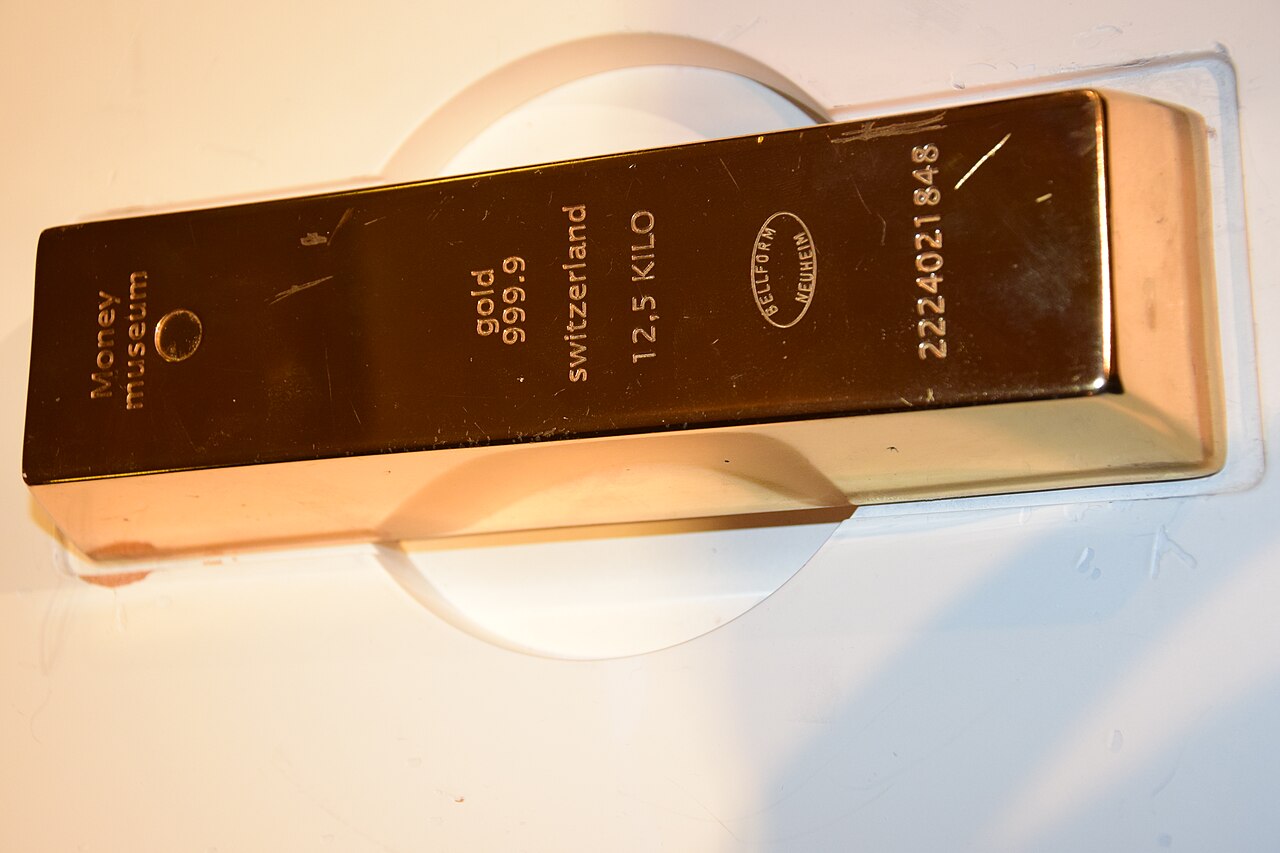
Why Gold ETFs Deserve a Spot in Your 2025 Portfolio
Gold has done something remarkable over the past few years: it has reminded a new generation of investors exactly why it earned the nickname the ultimate safe-haven asset. With inflation proving stickier than central bankers hoped, geopolitical tensions running high across multiple continents, and equity valuations stretched in several sectors, gold has surged past the $2,300-per-ounce mark and held its ground in ways that have surprised even seasoned analysts.
For most retail investors, buying physical gold bars or coins is impractical — storage costs, insurance, and liquidity issues make it a headache. That is where gold ETFs come in. These exchange-traded funds give you direct or indirect exposure to gold prices with the simplicity of buying a stock. You can purchase shares through any brokerage account, trade them intraday, and avoid the logistical nightmare of storing a precious metal. In 2025, with macro uncertainty still elevated, understanding which gold ETFs best fit your strategy could be one of the most important portfolio decisions you make this year.
How Gold ETFs Actually Work
Before diving into specific funds, it helps to understand that not all gold ETFs are built the same way. There are three main structures you will encounter:
- Physically-backed gold ETFs: The fund holds actual gold bullion in a vault. Each share represents a fractional ownership of that gold. When gold prices rise, so does the share price — almost perfectly.
- Gold futures ETFs: These funds use futures contracts rather than physical gold. They can suffer from a phenomenon called contango — where rolling expiring futures contracts into new ones erodes returns over time. Generally less suitable for long-term holders.
- Gold miner ETFs: These hold stocks of companies that mine gold. They offer leveraged exposure to gold prices (miners tend to move more dramatically than gold itself) but also carry company-specific and operational risks.
For most long-term investors seeking a straightforward inflation hedge, physically-backed ETFs are the gold standard — pun intended. Miner ETFs can complement a position if you want amplified upside potential and are comfortable with added volatility.
SPDR Gold Shares (GLD) — The Heavyweight Champion
Ticker: GLD | Expense Ratio: 0.40%
GLD is the largest gold ETF in the world by assets under management, consistently holding over $60 billion in gold bullion. Launched in 2004, it was the first gold ETF available to US investors and remains the most liquid option on the market. Its tight bid-ask spreads make it particularly attractive for active traders and institutional investors who move large positions.
Each share of GLD represents approximately 1/10th of an ounce of gold (the exact fraction decreases slightly over time as management fees are deducted from the trust’s gold holdings). The fund is backed by physical gold stored in HSBC’s London vaults, audited twice a year.
The main knock on GLD is its expense ratio of 0.40%, which is higher than some newer competitors. For long-term buy-and-hold investors, that difference compounds meaningfully over a decade. However, for traders who value maximum liquidity, GLD remains the go-to choice.
iShares Gold Trust (IAU) — The Cost-Conscious Choice
Ticker: IAU | Expense Ratio: 0.25%
IAU is BlackRock’s answer to GLD, and for long-term investors, it is arguably the better option. The expense ratio of 0.25% is meaningfully lower than GLD’s 0.40% — a difference that adds up to real money over years of compounding. Each IAU share represents 1/100th of an ounce of gold, making it a lower entry price per share, which some investors prefer.
With over $30 billion in assets, IAU is highly liquid, though its trading volume is lower than GLD. For investors who plan to hold for years rather than trade frequently, that liquidity difference is largely irrelevant. IAU holds physical gold in vaults in New York, Toronto, and London, providing geographic diversification of storage.
If your primary goal is a long-term inflation hedge and you are not actively trading in and out of the position, IAU’s lower cost structure gives it a clear edge over GLD.
SPDR Gold MiniShares (GLDM) — The Budget-Friendly Option
Ticker: GLDM | Expense Ratio: 0.10%
State Street launched GLDM in 2018 specifically to compete on cost, and it delivers. At just 0.10% annually, GLDM is one of the cheapest physically-backed gold ETFs available to US investors. It holds gold in the same HSBC vaults as GLD and is structured identically — just with a lower fee and a smaller share price (each share represents 1/100th of an ounce).
GLDM has grown rapidly since its launch and now holds tens of billions in assets. Its liquidity is solid for most retail investors, though it still trails GLD in daily trading volume. For a buy-and-hold investor with a 5-10 year time horizon, GLDM’s cost advantage is compelling. Over 10 years, the difference between a 0.10% and 0.40% expense ratio on a $50,000 position amounts to roughly $1,500 in fees — money that stays in your pocket with GLDM.
Aberdeen Standard Physical Gold Shares ETF (SGOL) — The Swiss Vault Alternative
Ticker: SGOL | Expense Ratio: 0.17%
SGOL offers a unique selling point: its gold is stored in vaults in Zurich, Switzerland — a jurisdiction many investors consider among the most politically stable and legally secure in the world. For investors who are concerned about counterparty risk or geopolitical scenarios where US or UK-based storage could theoretically be problematic, SGOL provides geographic diversification that GLD and IAU do not.
The expense ratio of 0.17% sits between IAU and GLDM, making it cost-competitive. SGOL is smaller than the major players but has sufficient liquidity for retail investors. It is a solid choice for those who prioritize storage location as part of their risk management strategy.
VanEck Gold Miners ETF (GDX) — For Amplified Exposure
Ticker: GDX | Expense Ratio: 0.51%
GDX is not a physical gold ETF — it holds stocks of major gold mining companies including Newmont, Barrick Gold, Agnico Eagle, and others. This distinction matters enormously for how it behaves. Mining stocks tend to move 2-3 times more than gold prices in both directions, giving GDX a leveraged feel without using actual leverage.
When gold prices rise, miners benefit from expanding profit margins (their costs are relatively fixed while revenue rises with gold prices), which can drive outsized stock gains. When gold falls, the opposite is true — miners can get crushed. GDX also carries risks unrelated to gold prices: labor disputes, mine accidents, regulatory changes, currency exposure in countries where mines operate, and management execution.
GDX makes sense as a complement to a physical gold ETF position, not a replacement. A common allocation might be 70-80% in a physical ETF like IAU or GLDM and 20-30% in GDX for investors who want some upside amplification while maintaining a core stable position.
VanEck Junior Gold Miners ETF (GDXJ) — High Risk, High Reward
Ticker: GDXJ | Expense Ratio: 0.52%
GDXJ takes the miner concept one step further by focusing on junior mining companies — smaller firms that are often in exploration or early production phases. These companies have enormous upside potential if they discover significant gold deposits or successfully ramp up production, but they also carry substantially higher risk than the major miners in GDX.
Junior miners are more sensitive to gold price movements, more vulnerable to financing challenges, and more likely to face operational setbacks. GDXJ is appropriate only for investors with a high risk tolerance and a genuine understanding of the mining sector. It should represent a small, speculative slice of a portfolio — not a core holding.
How to Size Your Gold ETF Position
One of the most common questions retail investors ask is: how much of my portfolio should be in gold? There is no universal answer, but several frameworks are worth considering.
- The 5-10% rule: Many financial planners suggest allocating 5-10% of a portfolio to gold as a hedge. This is enough to provide meaningful protection during inflationary or crisis periods without dragging down returns during strong equity bull markets.
- The inflation-adjusted approach: If you are particularly concerned about inflation eroding purchasing power, some investors go as high as 15-20% in gold and gold-adjacent assets. This is more aggressive and should be balanced against the opportunity cost of not being in equities.
- Dollar-cost averaging: Rather than making a lump-sum purchase, consider building your gold ETF position gradually over several months. This reduces the risk of buying at a short-term peak.
Gold does not pay dividends or generate earnings. Its value comes entirely from price appreciation and its role as a store of value. That means it works best as a portfolio stabilizer rather than a primary growth engine.
Key Risks to Understand Before Buying
Gold ETFs are not risk-free. Here are the most important risks to keep in mind:
- Opportunity cost: During strong bull markets for equities, gold often underperforms significantly. Holding 10% in gold during a year when the S&P 500 returns 25% means you left money on the table in that portion of your portfolio.
- Dollar strength: Gold is priced in US dollars. When the dollar strengthens significantly, gold prices often fall — even if other economic conditions seem favorable for gold. This is a key dynamic to watch in 2025 given ongoing Fed policy uncertainty.
- No income: Unlike dividend stocks or bonds, gold generates no income. You are entirely dependent on price appreciation.
- Counterparty risk: While physically-backed ETFs minimize this, there is always some level of trust required in the custodian holding the gold. Reading the fund’s prospectus to understand custody arrangements is worthwhile.
- Tax treatment: The IRS classifies gold ETFs backed by physical gold as collectibles, which means long-term capital gains are taxed at a maximum rate of 28% — higher than the 15-20% rate on most stock gains. This is an important consideration for taxable accounts. Holding gold ETFs in a tax-advantaged account like an IRA can mitigate this.
Gold ETF Comparison at a Glance
| ETF | Ticker | Expense Ratio | Type | Best For |
|---|---|---|---|---|
| SPDR Gold Shares | GLD | 0.40% | Physical | Active traders, maximum liquidity |
| iShares Gold Trust | IAU | 0.25% | Physical | Long-term buy-and-hold |
| SPDR Gold MiniShares | GLDM | 0.10% | Physical | Cost-conscious long-term investors |
| Aberdeen Physical Gold | SGOL | 0.17% | Physical | Swiss vault storage preference |
| VanEck Gold Miners | GDX | 0.51% | Miners | Amplified exposure, higher risk |
| VanEck Junior Miners | GDXJ | 0.52% | Junior Miners | Speculative, high risk/reward |
What to Watch in 2025
Several catalysts could drive gold prices higher — or lower — in the months ahead:
- Federal Reserve policy: If the Fed cuts interest rates more aggressively than expected, real yields fall, which historically boosts gold prices. Conversely, if inflation re-accelerates and the Fed holds rates higher for longer, gold could face headwinds.
- Central bank buying: Central banks globally — particularly in emerging markets — have been net buyers of gold at record levels. This structural demand has been a significant price support and shows no signs of reversing.
- Geopolitical risk: Ongoing conflicts and rising tensions in multiple regions continue to drive safe-haven demand. Any escalation could send gold sharply higher.
- US dollar trajectory: Watch the DXY (US Dollar Index). A weakening dollar environment is generally bullish for gold.
- Equity market volatility: If stocks experience a significant correction, gold’s role as a portfolio hedge tends to shine, potentially driving inflows into gold ETFs.
The Bottom Line
Gold ETFs offer one of the cleanest, most accessible ways for retail investors to add a time-tested inflation hedge to their portfolios. For most long-term investors, GLDM or IAU represent the sweet spot — low costs, physical backing, and solid liquidity. Traders who need maximum flexibility will prefer GLD. Investors seeking geographic diversification of storage may appreciate SGOL. And those willing to accept higher volatility for potentially higher returns can complement a core physical position with GDX.
The key is not to treat gold as a get-rich-quick trade but as a strategic portfolio allocation — a ballast that tends to hold value when other assets struggle. In an environment where inflation, geopolitical uncertainty, and monetary policy questions remain unresolved, that ballast is worth having.
What do you think? Share your take in the comments below.
This article is for informational purposes only and does not constitute financial advice. Always conduct your own research before making any investment decisions.