

Penny stocks have a magnetic pull on new investors. The idea of buying thousands of shares for a few hundred dollars — and watching them double or triple overnight — sounds like a shortcut to wealth. And occasionally, it works out exactly that way. But for every penny stock that rockets 500%, there are dozens that quietly fade to zero, taking investors’ money with them. Understanding what penny stocks actually are, how they trade, and what traps to avoid is essential before you put a single dollar on the line.
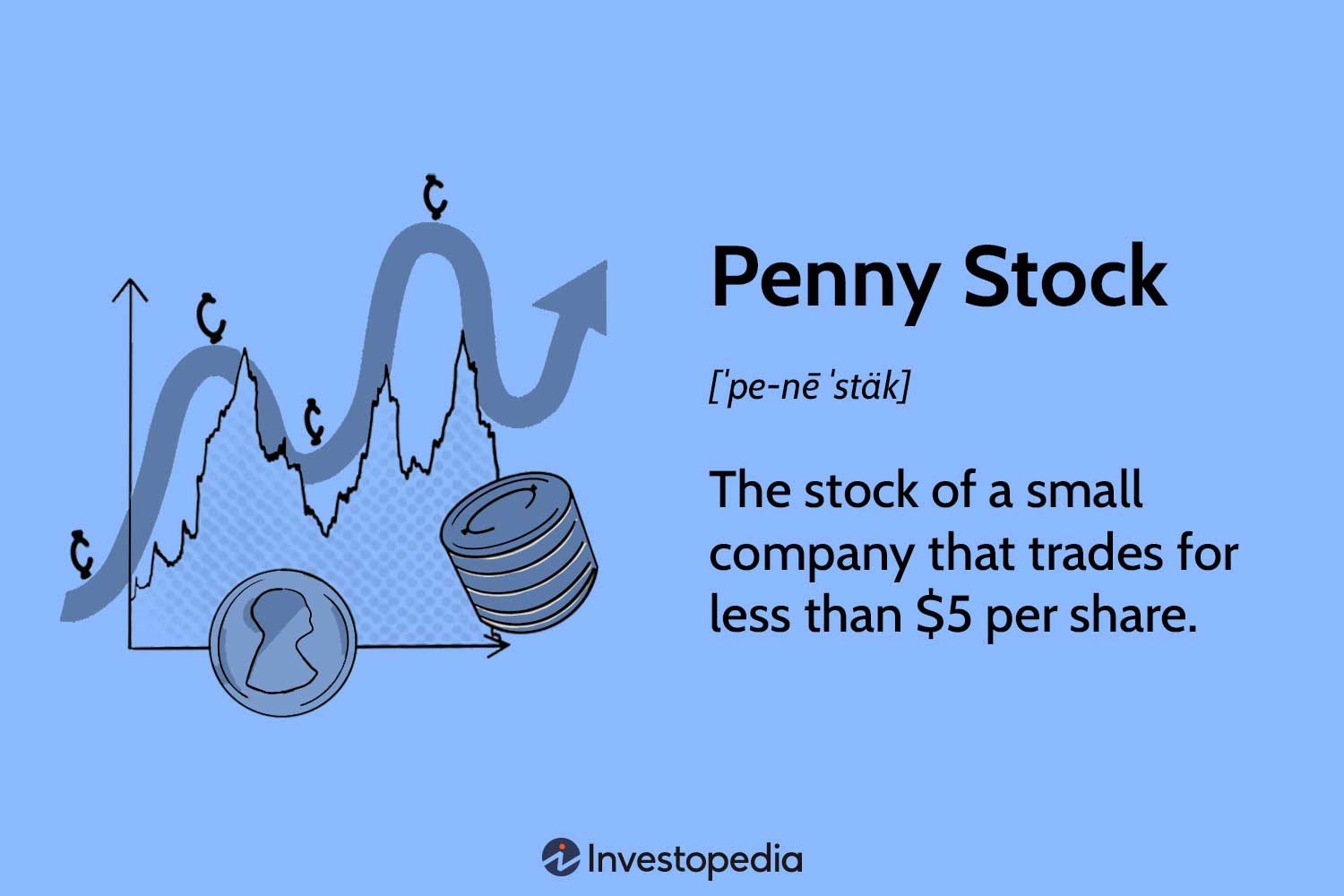
According to the U.S. Securities and Exchange Commission (SEC), penny stocks are generally defined as shares of small companies trading below $5 per share. While the name conjures images of literal one-cent stocks, the category covers a wide range — from sub-dollar micro-caps to $4 stocks listed on major exchanges. What unites them is low price, small market capitalization, and, very often, thin trading volume. These characteristics create both the opportunity and the danger that define penny stock investing.

How Penny Stocks Differ From Regular Stocks
Most investors are familiar with stocks listed on the New York Stock Exchange (NYSE) or Nasdaq. These exchanges have strict listing requirements — minimum share prices, revenue thresholds, governance standards, and regular financial disclosures. Penny stocks, by contrast, often trade on less regulated venues:
- OTC Markets (Over-the-Counter): The OTC marketplace is where most penny stocks live. It includes tiers like OTCQX, OTCQB, and the Pink Sheets (now called OTC Pink). The Pink Sheets have the fewest disclosure requirements, meaning companies listed there may not file regular financial reports with the SEC.
- OTC Bulletin Board (OTCBB): This electronic system was once a common home for penny stocks but has largely been replaced by OTC Markets platforms.
- Major Exchanges: Some stocks trading below $5 do appear on Nasdaq or NYSE, particularly companies that have fallen from higher prices. These carry more regulatory oversight than OTC stocks.
The key difference for investors is transparency. A company on Nasdaq must file quarterly and annual reports with the SEC, giving investors a clear picture of its finances. Many OTC penny stocks have no such obligation, making it extremely difficult to evaluate their true value.
Why Investors Are Attracted to Penny Stocks
The appeal is straightforward: low price creates the illusion of affordability and massive upside. If a stock trades at $0.10 and moves to $0.30, that’s a 200% gain — the kind of return that would take years in a broad market index fund. This math is seductive, especially for investors with limited capital who feel priced out of higher-priced blue-chip stocks.

There’s also the thrill factor. Penny stocks can move dramatically in a single session, driven by news, social media buzz, or even coordinated buying campaigns. For traders who enjoy active, fast-moving markets, that volatility can feel like an opportunity rather than a warning sign.
Additionally, some legitimate small companies do start as penny stocks. Early investors in companies that eventually grew into mid-cap or large-cap businesses made extraordinary returns. The challenge is identifying those rare winners before the crowd does — and before the fraudsters get involved.
The Real Risks You Need to Understand
Penny stocks carry risks that are fundamentally different from — and generally greater than — those of established stocks. Here’s what every investor needs to know:

Lack of Liquidity
Many penny stocks trade only a few thousand shares per day. This means you might be able to buy easily, but selling at your desired price can be nearly impossible. Wide bid-ask spreads — the gap between what buyers will pay and what sellers want — can eat 5% to 20% of your investment the moment you enter a trade. In illiquid markets, a single large sell order can crash the price dramatically.
Limited Financial Information
Without mandatory SEC filings, you’re often flying blind. Companies on the Pink Sheets may not have audited financial statements, verifiable revenue figures, or clear business plans. Evaluating a penny stock the way you’d evaluate Apple or Microsoft is simply not possible in most cases.
Pump-and-Dump Schemes
This is the most notorious penny stock danger. In a pump-and-dump scheme, promoters — sometimes paid by company insiders — aggressively hype a stock through email blasts, social media posts, or online forums. Retail investors pile in, driving the price up. The promoters then sell their shares at the inflated price, the hype stops, and the stock collapses. Investors who bought during the pump are left holding nearly worthless shares. The SEC brings dozens of enforcement actions related to penny stock fraud every year.
Reverse Mergers and Shell Companies
Some penny stocks are shell companies — businesses with no real operations that exist primarily as vehicles for fraud or speculative reverse mergers. A reverse merger occurs when a private company acquires a public shell to avoid the standard IPO process. While some legitimate companies use this route, it’s also a common fraud mechanism.
Dilution Risk
Small companies often raise cash by issuing new shares, which dilutes existing shareholders. A company might issue millions of new shares at a discount to fund operations, dramatically reducing the value of shares already outstanding. This is especially common among penny stocks that burn through cash quickly.
How to Research a Penny Stock
If you decide to explore penny stocks despite the risks, rigorous research is non-negotiable. Here’s a practical framework:
- Check SEC filings: Visit SEC.gov and search for the company’s filings. If a company has no filings, that’s a major red flag. Look for 10-K (annual) and 10-Q (quarterly) reports.
- Verify the business: Does the company have a real product, real customers, and real revenue? Search for independent news coverage, not just press releases issued by the company itself.
- Examine the share structure: Look at the total shares outstanding and authorized shares. A company with billions of authorized shares has enormous dilution potential. Check for recent share issuances.
- Identify insiders: Who owns the company? Are insiders buying or selling? SEC Form 4 filings show insider transactions for reporting companies.
- Assess trading volume: Avoid stocks with extremely thin volume unless you’re prepared to hold for a long time. Low volume amplifies volatility and makes exits difficult.
- Watch for promotion: If you’re hearing about a penny stock through unsolicited emails, social media ads, or message board posts from unknown accounts, treat it as a red flag, not a tip.
Practical Trading Strategies for Penny Stocks
Experienced penny stock traders — those who do it successfully — tend to follow disciplined rules rather than chasing hype. Here are strategies worth considering:
Set Strict Position Limits
Never allocate more than 1% to 2% of your total portfolio to a single penny stock. Given the high failure rate, treating these as lottery tickets with defined, limited downside is the only rational approach. If you have a $10,000 portfolio, that means no more than $100 to $200 per position.
Use Limit Orders, Not Market Orders
In illiquid markets, a market order can execute at a price far worse than expected. Always use limit orders — specifying the exact price you’re willing to pay or accept — to control your entry and exit points.
Define Your Exit Before You Enter
Decide in advance at what price you’ll sell — both for a profit target and a stop-loss. Penny stocks can reverse violently and quickly. Having a pre-defined exit removes emotion from the equation and protects you from holding a losing position indefinitely.
Focus on Catalysts
The most tradeable penny stock moves tend to be driven by specific catalysts: FDA approvals for small biotech companies, contract announcements, earnings surprises, or sector-wide momentum. Trading around a real, verifiable catalyst is more defensible than buying based on social media buzz.
Avoid Holding Overnight (for active traders)
Many penny stock traders prefer to close positions before the market closes. Overnight news, halts, or manipulation can gap a stock dramatically against you with no opportunity to exit. This is a personal risk management choice, but it’s one many experienced traders make.
Penny Stocks vs. Small-Cap Stocks: Know the Difference
It’s worth distinguishing penny stocks from legitimate small-cap investing. Small-cap stocks — generally defined as companies with market capitalizations between $300 million and $2 billion — can also be volatile and carry higher risk than large-caps. But most small-caps trade on major exchanges, file regular SEC reports, and have institutional analyst coverage.
Investing in a diversified small-cap ETF or a carefully researched small-cap stock is a fundamentally different activity from trading OTC penny stocks. The former is a recognized, if higher-risk, investment strategy. The latter is closer to speculation — and for most retail investors, the odds are stacked against them.
Key Takeaways for Retail Investors
- Penny stocks are generally defined as shares trading below $5, most commonly on OTC markets with limited regulatory oversight.
- The biggest risks include illiquidity, lack of financial transparency, pump-and-dump fraud, and aggressive share dilution.
- Legitimate penny stock trading requires strict position sizing, limit orders, pre-defined exits, and catalyst-based analysis.
- Most retail investors are better served by diversified index funds or thoroughly researched individual stocks on major exchanges.
- If you do trade penny stocks, treat them as high-risk speculation — never money you can’t afford to lose entirely.
The Bottom Line
Penny stocks occupy a unique and treacherous corner of the market. The potential for outsized gains is real, but so is the potential for total loss — and the deck is often stacked against retail investors by fraud, illiquidity, and information asymmetry. The investors who navigate this space successfully do so with iron discipline, deep research, and strict risk management. For most people building long-term wealth, penny stocks deserve at most a tiny, speculative slice of a well-diversified portfolio. If you’re drawn to the excitement of fast-moving, high-upside trades, go in with eyes wide open — and never risk more than you can comfortably lose.
What do you think? Share your take in the comments below.
This article is for informational purposes only and does not constitute financial advice. Always conduct your own research before making any investment decisions.